
Last Updated on June 10, 2026
To unlock a bedroom or bathroom door from the outside, use the small hole or slot in the center of the knob. A privacy lock has no keyhole, just that hole, which reaches the inner turn-piece. Push a privacy key, a small flathead screwdriver, a thick paper clip, or a flattened clothes-hanger tip straight into the hole and turn, exactly like a key. Or, since privacy locks have no deadlocking plunger, slip a thin piece of plastic between the door and frame to push the latch back. Five easy ways, all below.
Everyone with kids has had it happen: the bathroom or bedroom door is locked from the inside and someone is locked out. The good news is these are privacy locks, not keyed locks, so you can be in within seconds once you know the trick.
Watch: how to open a locked bedroom or bathroom door
What kind of locks are on bedroom and bathroom doors?

Bedroom and bathroom doors use a privacy lock. You lock it from the inside with a push button or turn button, and on the outside there is no key, just a small hole (or a slot) in the center of the knob or lever. That hole is there on purpose, so anyone can get in during an emergency.
The Technique to Open a Privacy Lever
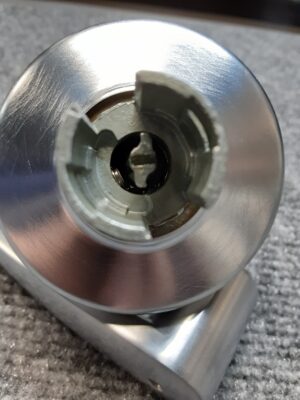
The hole on the exterior of the privacy lever lines up with a small turn-piece that has a notch or groove on it inside of the lock body. Every key-style method below works by reaching through the hole and turning that notched piece. The one trick: go straight in so the tool catches the groove. If you come in at an angle, you will miss it and it feels like nothing is there.
5 ways to unlock a bedroom or bathroom door
1. Use the privacy key
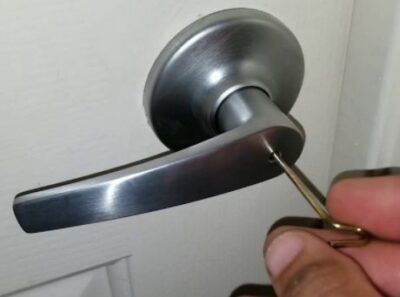
The lock came with a thin privacy key, a small rod with a flattened tip. Push it straight into the hole, catch the groove, and turn. Tip: store the key on top of the door frame so it is there the next time a child locks the door. We sell privacy keys in packs of five and keep them at our Scottsdale shop, but any of the household items below works just as well in a pinch.
2. Use a small flathead screwdriver
An eyeglass-size flathead screwdriver (the kind from a dollar-store repair kit) is the easiest substitute. Insert it into the hole, turn, and you are in, just like using the key. On a slotted (twist) privacy lock, turn the slot a quarter turn.
3. Flatten the tip of a clothes hanger
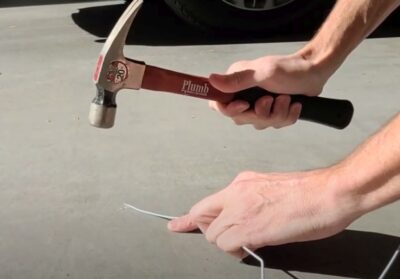
No screwdriver? Straighten a wire coat hanger and tap the tip flat with a hammer so it fits the groove. Then use it exactly like a key, straight in and turn.
4. Use a sturdy paper clip
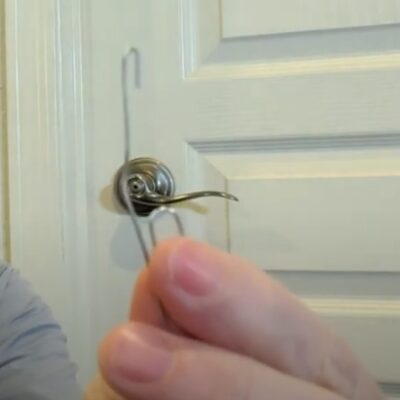
Use a larger paper clip, the thin ones just twist before they turn the lock. Straighten it, bend a small flat tip, and turn it in the hole like a key.
5. Slip a plastic card past the latch
The first four methods turn the lock; this one bypasses the latch. Because privacy locks have no deadlocking plunger, a thin piece of plastic, a cut water bottle or a flexible card, slides the angled latch back. Work it between the door and frame at the latch, wiggle it toward the latch, and push the door open. It works best on a privacy lock for exactly this reason.
Watch: opening a locked door with a piece of plastic
If the door still will not open
If none of these work, you may have a keyed knob (a keyhole, not a small hole) instead of a privacy lock, or the latch is jammed in a bound door. For a bound door, push or lift the door slightly while you turn the tool. A keyed knob needs its key, do not force it. See lock repair if the latch is sticking.
Keep a child from locking themselves in
Kids love the privacy button. Keep a privacy key or a small screwdriver on top of the door frame so you are never stuck, and for a toddler’s room consider swapping to a passage knob (no lock at all) so the door cannot be locked.
When to call a locksmith
If the knob is keyed, the latch is broken, or a child is locked in and the release will not catch, call a locksmith. We open interior doors without damage and can replace the lock. See our residential locksmith services and lockout service. ACME serves Phoenix.
Kwikset Smart Lock Reset FAQ
How do you open the bedroom door if you have nothing to turn the lock?
Slide a thin piece of plastic, like a cut water bottle, between the door and frame at the latch and push the angled latch back. Privacy locks have no deadlocking plunger, so this works easily.
My knob has a keyhole, not a small hole. Now what?
That is a keyed knob, not a privacy lock, so it needs the key. If the key is lost, a locksmith can open it without damage or rekey it.