Last Updated on October 2, 2026
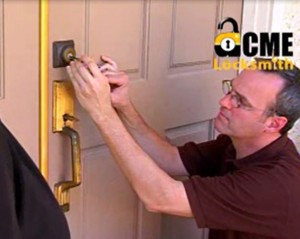
Though some states do not require it, all legitimate locksmiths will verify ownership before opening any property, whether it be a car, home, safe, etc… Verification of ownership can be a title, registration, photo ID, piece of mail or other document with your name on it and the property address.
If you don’t have something that confirms you have the rights to the property you’re asking us to open, we will require that someone that does have that right be present when we arrive on site.
If that can’t be done, there are other ways to prove you are the owner, such as property records.
Which States Require Verification?
Verification is required in states that license locksmiths. Those states are:
Alabama
California
Connecticut
Florida
Illinois
Louisiana
Maryland
Nassau County in Long Island
Nebraska
Nevada
New Jersey
New York City
North Carolina
Oklahoma
Oregon
Texas
Virginia
What About Arizona?
Arizona does not require it. There is no locksmith license in this state, and there is nothing in Arizona law that makes a locksmith check who you are before opening a house or a car. The one statute that even mentions locksmiths, A.R.S. 13-1505, covers burglary tools and master keys. It says nothing about verifying ownership.
We check anyway, on every job. Turn it around for a second. If somebody was standing at your front door telling a locksmith it was their house, would you want that locksmith to ask for proof? That is the whole reason we do it.
It keeps the work lawful too. That same statute only covers a locksmith using master keys in the course of a lawful business. Opening a door for somebody with no right to be there is not lawful business in any state.
Even if it’s not required in your state, all credible locksmith companies will ask that you provide proof of ownership before letting you in. We are security specialists and not doing so seems ridiculous.
If your state is not on this list, you will have to check with state and local laws.
ACME Locksmith will not unlock a car or a home for just anyone, because they could be….well….anyone.
How You Prove Ownership
Homes / Businesses
- Provide a drivers license with the address of the property
- Provide a piece of mail addressed to you at the property with a photo ID
- Show company records (business card o r website) that shows you name and position with the company
- Provide a copy of the lease
- We can look you up on the county property records to verify the name of the owner, then provide an ID when we are onsite matching that name
- If you’ve just purchased the home, and don’t have a key, provide a closing statement
Automotive
Your name will need to be on the car’s registration, proof of insurance, or title with a photo id
Safes
Safes are a little different because people don’t typical keep proof of purchase. To verify ownership of a safe the locksmith will verify that you have access to the property where the safe is located. That can be any of the home / business methods above. Once that has been confirmed, we will access a locked safe.
The thought is that, if you have legal access to the property, you have access to everything within the property.
Proving Property Rights When Not the Owner
If you are not the owner, but you will be the person onsite for the service, the owner will need to have their information verified using any of the above techniques.
A locksmith will then usually require a signed letter from the owner allowing the locksmith to gain access to the property for the person they are meeting. That person will then also need to provide ID at the time of service.
What Won’t Locksmiths Accept as Proof?
- We don’t accept “phone authorizations” because it can be anyone on the phone.
- We don’t accept email authorizations, because anyone could have sent the email.
Sometimes, potential customers complain about their having to provide this information before we will let them in. Sometimes they simply hang up and call someone else, we know of many fly-by-night companies that will let just anyone in. But credible locksmiths won’t risk your property.
We do this for you, the property owner, to protect your property from someone trying to get into it.