
Last Updated on June 10, 2026
To remove a broken key from a lock, first rotate the cylinder back to vertical (key cuts pointing up) so the pins will release the key. If part of the key sticks out, grip it with needle-nose pliers and pull straight out. If it broke off flush, slide a broken-key extractor or a thin jigsaw blade in alongside the key, catch a cut, and draw it out. For a clean flush break, a dab of hot glue on a stick can grab it. Never use super glue, and never push the key deeper.
Keys snap from metal fatigue, usually right as you turn them, so the broken piece is often trapped inside the cylinder. The good news: most broken keys, and snapped keys in a deadbolt, knob, or even an ignition, come out with a few household tools if you work in the right order. Start by understanding why it is stuck.
Why a broken key gets trapped
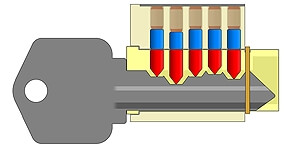
Inside the lock, spring-loaded pins drop into the cuts of the key. When you turn the key, those pins ride along the cuts. If the cylinder was rotated when the key broke, the pins are no longer at the shear line and they clamp the broken piece in place. That is why the first move is always to return the cylinder to its resting vertical position, for most home locks key cuts up, so the pins line up and free the key. Nothing else works until the cylinder is straight.
How to get a broken key out of a lock: 7 methods
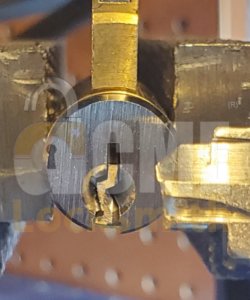
Work these from easiest to most involved. Most keys come out in the first two or three.
- Broken-key extractor. This is the professional tool for the job. Slide the hooked extractor into the keyway alongside the broken blade, rotate so the hook catches a cut, and draw the key out.
- Pliers or tweezers. If any of the key sticks out past the face, grip it with needle-nose pliers or tweezers and pull straight out. Do not wiggle it side to side, that can snap it again deeper in.
- Jigsaw or coping saw blade. A thin blade with fine teeth works like an extractor. Slip it in teeth-down beside the key, turn slightly so the teeth bite a cut, and pull.
- Hot glue stick. Touch the end of a glue-gun stick (like these glue sticks on Amazon) to a key broken off flush, hold a few seconds until it grips, then pull. Works only on a clean, dry, flush break, and it releases cleanly afterward.
- A shot of dry lubricant. A little PTFE or graphite in the keyway loosens a blade that is binding, so it slides out more easily. Avoid oily sprays, which gum up the pins.
- Push it out from the back. If you can remove the deadbolt or knob from the door, and then remove the cylinder from the lock, you can just push the blade out the rear of the cylinder with a thin rod or stiff wire.
- Two paperclips or a bobby pin. A last household option: slide thin metal down both sides of the blade, pinch it, and pull.
The broken-key extractor: the tool that works best
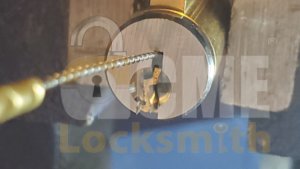
A broken-key extractor is a thin steel tool with a hooked or barbed edge, sold in cheap multi-packs online, for example these key extractor sets on eBay. Slide it into the keyway along the flat of the blade, rotate a quarter turn so the barb bites into a cut, and pull the key and tool out together. Two tools, one on each side, work even better on a stubborn blade. It is the same tool a locksmith reaches for first.
Watch: removing a broken key from a lock
Removing a broken key from a deadbolt
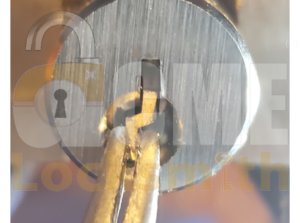
A deadbolt is the same pin-tumbler cylinder as a knob, so the method is identical: turn the plug back to vertical first, then extract. Deadbolts make it easier in one way, you can usually unscrew the two bolts on the inside, pull the cylinder, and push the broken blade straight out the back. If the bolt is thrown and stuck, get the plug back to the unlocked, vertical position before you pull anything.
Removing a broken key from a door knob or lever
Same approach. Return the knob’s plug to vertical, then use pliers if the blade protrudes or an extractor if it is flush. If the knob spins freely or the latch will not work afterward, the cylinder may be damaged and need a repair or rekey.
Broken key stuck in a car ignition
A key snapped in a car ignition is the trickiest case. The cylinder must be in the OFF position, with the steering wheel unlocked, before anything will slide out, jiggle the wheel gently to release it. Use an extractor with light pressure only. Ignition cylinders are tight and easy to damage, and a chipped or transponder key adds cost, so if the blade does not come free quickly, stop and call an automotive locksmith rather than risk the ignition.
What not to do
Do not use super glue. It bonds to the lock as readily as the key and can ruin the cylinder, turning a free fix into a replacement. Do not push the broken piece deeper, do not jam in objects that can themselves snap off, and do not start drilling, which destroys the lock.
Why keys break, and how to prevent it
A key that snaps is almost always worn or a poor copy. Copies cut from copies drift out of spec and get brittle. Once you get the piece out, stop using its worn twin, have a locksmith cut a fresh key to the lock’s code, and if the lock feels stiff, lubricate it with a dry lube and consider a new key or a rekey so you are working with clean pins. A light keychain and a quick shot of dry lube once a year keep keys from snapping in the first place.
When to call a locksmith, and what it costs
If the cylinder will not return to vertical, the blade is wedged past the face, or it broke in an ignition, a locksmith extracts it without damaging the lock and cuts you a new key on the spot. A simple broken-key extraction is usually a low service-call charge plus the new key; an ignition or high-security cylinder costs more. See lock repair, lockout service if you are stuck outside, and how we make new keys. ACME serves Phoenix.
FAQ
How do I get a broken key out of a lock?
Turn the cylinder back to vertical so the pins release the key, then pull it with needle-nose pliers if it sticks out, or a broken-key extractor or thin jigsaw blade if it broke off flush. A dab of hot glue on a stick can grab a clean flush break.
How do I remove a broken key from a deadbolt?
Same as any cylinder: return the plug to the unlocked vertical position, then extract from the front. On a deadbolt you can also unscrew the inside, pull the cylinder, and push the blade out the back.
How do I get a broken key out of a car ignition?
Put the cylinder in the OFF position with the steering wheel unlocked, then use an extractor with light pressure. Ignitions are easy to damage, so if it does not come free quickly, call an auto locksmith.
Can a locksmith remove a broken key?
Yes, quickly and without damaging the lock, and they cut a replacement on site, including for deadbolts, ignitions, and high-security locks.
Why does my key keep breaking?
A worn key or a worn cylinder. Stop using the worn key, have a fresh one cut to the lock’s code, lubricate the lock with a dry lube, and consider a rekey.