Last Updated on October 2, 2026
ANSI lock grades rank a lock’s strength and durability from Grade 1 (best) to Grade 3 (basic). The grade comes from how many open-close cycles the lock survives, how many door strikes (hammer blows) it takes, and a weight test. Grade 1 is commercial-strength, Grade 2 is solid for homes, and Grade 3 is the cheap builder hardware you should avoid on exterior doors. Buy at least a Grade 2 deadbolt for an entry door, or Grade 1 for the best protection. Full specs below.
The ANSI/BHMA grading system was built to standardize how locks are tested, so the grade on the box tells you the quality you are buying. There are three grades, and each has exact test minimums for knobs/levers and for deadbolts.
ANSI lock grade specs (Grade 1 vs 2 vs 3)
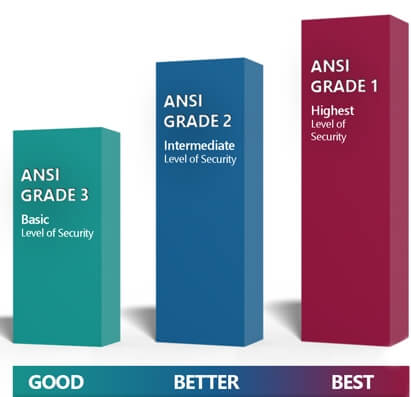
| Test | Grade 1 | Grade 2 | Grade 3 |
|---|---|---|---|
| Knob/lever cycles | 800,000 | 400,000 | 200,000 |
| Door strikes (knob/lever) | 6 | 4 | 2 |
| Weight test (knob/lever) | 360 lbs | 250 lbs | 150 lbs |
| Deadbolt cycles | 250,000 | 150,000 | 100,000 |
| Deadbolt hammer strikes | 10 | 5 | 2 |
| Best for | Commercial / max security | Most homes | Interior doors only |
Grade 1: commercial, the most secure
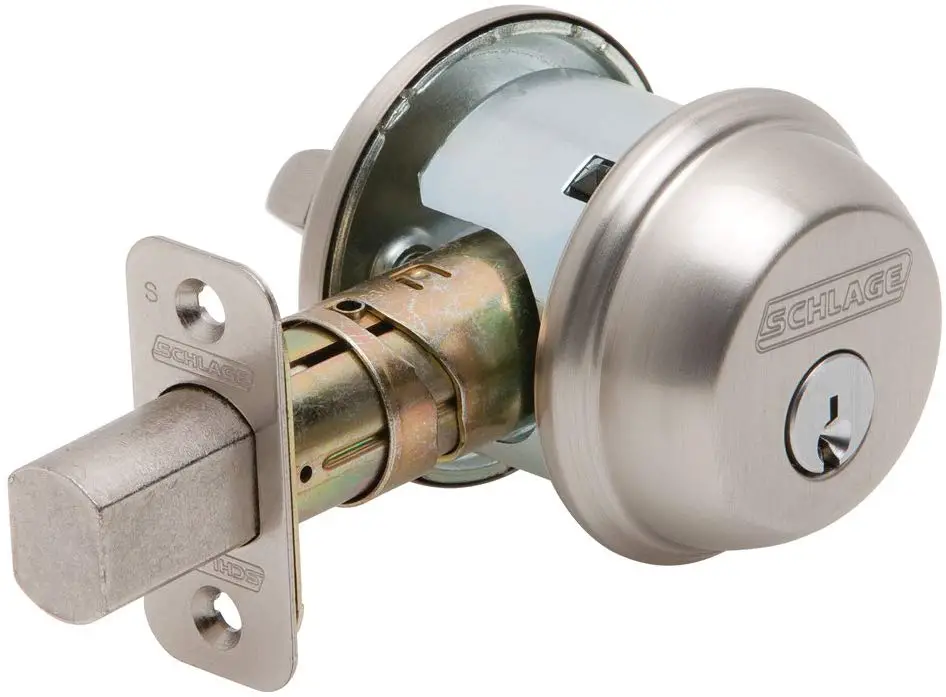
Grade 1 is the top-of-the-line rating, built for commercial security, and increasingly offered on residential electronic locks. To earn it, a knob or lever must withstand 800,000 cycles, 6 door strikes, and a 360-pound weight test, and a Grade 1 deadbolt must take 250,000 cycles and a 10-strike hammer test. It is the strongest and the most expensive, with fewer style and finish options. Use it when you want the best security on a home.
Our favorite Grade 1 deadbolts are the B60 and B62 series from Schlage. B60 is the single side and B62 is the double sided deadbolt (takes keys on both sides). You can price the B60 and B62 deadbolts on Amazon.
Grade 2: the residential sweet spot
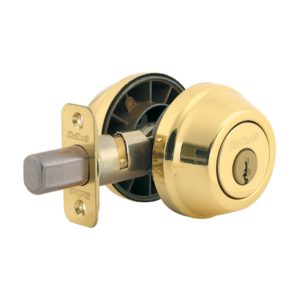
Grade 2 is the next level up. It exceeds residential building requirements, though it is usually not enough for heavy commercial doors. A Grade 2 knob or lever must handle 400,000 cycles, 4 door strikes, and a 250-pound weight test, and a Grade 2 deadbolt must take 150,000 cycles and a 5-strike hammer test. We recommend at least Grade 2 on every exterior door.
Grade 3: basic builder-grade
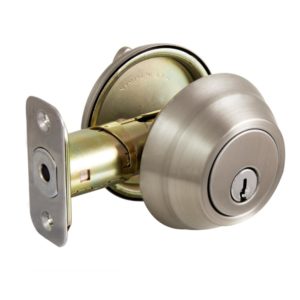
Grade 3 is the least secure and the most easily bypassed, the basic builder hardware on most homes. A Grade 3 knob or lever must handle 200,000 cycles, 2 door strikes, and a 150-pound weight test, and a Grade 3 deadbolt 100,000 cycles and a 2-strike hammer test. It is fine for interior doors, but on an exterior door you should upgrade to Grade 2 or higher, or have a locksmith add anti-bump, anti-pick pins.
What grade lock should I buy?
At least Grade 2 for exterior doors, which balances strength and cost, and Grade 1 if you want maximum security or have a commercial door. Grade 3 belongs on interior and closet doors only. Pair a Grade 1 or 2 deadbolt with 3-inch strike screws for the biggest real-world gain. If you are not sure, stop by a local locksmith shop and they will help you pick.
Residential grade vs commercial grade locks
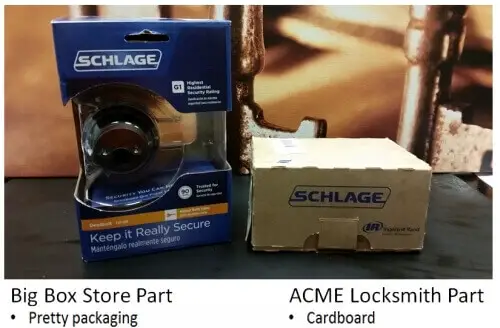
The ANSI grading system does not formally distinguish residential from commercial, the same test minimums apply to both. But in practice, locks built for commercial use are better products: heavier, no plastic parts, and more durable in every way. A commercial Grade 2 deadbolt from a locksmith outperforms a big-box residential Grade 2, even at the same grade.
ANSI vs BHMA grades
You may also see a BHMA letter grade (AAA, AA, A) on the box. BHMA writes the tests ANSI adopts, and it scores Security, Durability, and Finish separately. See BHMA lock grades explained, and for the strongest options our high-security locks.