
Last Updated on September 11, 2026
Arizona pool fence code (A.R.S. 36-1681) requires a barrier around the entire pool that is at least 5 feet tall, with every gate or door to the pool self-closing and self-latching. The latch release must sit at least 54 inches high to keep small children out, unless the gate is secured with a keyed or combination lock, which removes the height rule. Cities can be stricter, so always confirm your city code. Links to the major Maricopa County city codes are at the bottom of this page.
Arizona has the perfect climate for pools and year-round outdoor entertaining, but a pool is also a hazard. Every year a small child is lost to a pool drowning, which is why the State of Arizona, Maricopa County, and Arizona cities enforce pool barrier codes on new construction and, generally, on the sale or transfer of existing homes.
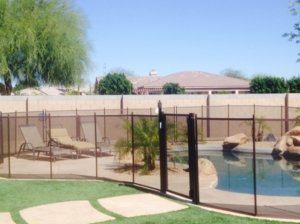
The general Arizona pool barrier requirements
The state pool code is A.R.S. 36-1681. Requirements vary by barrier type, but in general terms the barrier rules are:
- A barrier surrounds the entire pool. It can be a free-standing pool fence, a barrier that uses the yard wall as part of it, or a barrier that uses part of the home.
- The barrier is at least 5 feet tall.
- Any access to the pool (gate or door) is self-closing.
- Those accesses are self-latching, so once closed they must be unlatched to enter.
- The unlatching device sits over 54 inches high.
We reviewed the pool codes for the 10 most populous Maricopa cities. Each generally agreed with the state code, though a few were stricter. Always consult your city’s specific code; links are at the end. ACME Locksmith helps reach compliance when the fix needs a door to self-close or a lock installed, through our gate lock and lock installation services. The figures below follow the Arizona Revised Statute; your city may differ.
Free-standing pool fences: gate and latch rules
For a free-standing fence or wall that surrounds only the pool and attaches to no building, beyond being 5 feet tall, any gate to the pool must be self-closing and self-latching and must open outward, away from the pool. The latch must be:
- At least 54 inches above the ground if mounted on the outside of the gate, or
- At least 5 inches below the top of the gate if mounted on the inside.
- No gap larger than 1/2 inch within 24 inches of the latch, unless a key or combination lock secures the gate, in which case the latch may be mounted at any height.
The 54-inch rule keeps little hands away from the latch. Everything in pool code is geared to keeping small children out of harm’s way.
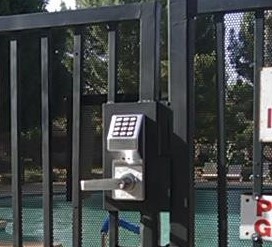
How a locksmith can help you meet pool code
Most pool code failures come down to two things: a gate or door that does not close and latch on its own, or a latch that sits too low. Both are locksmith fixes. Bring us the gate or door, or have us come out, and we will get it compliant without you having to replace the whole gate.
- Make it self-close. We install spring hinges on residential gates and house doors, and tension-spring kits or a gate closer on heavy or commercial gates, so the gate shuts on its own every time.
- Make it self-latch at the right height. We mount a self-latching latch that releases above 54 inches, or install a keyed or combination gate lock, which removes the 54-inch height rule altogether and is usually the cheapest path to compliance.
- Convert house doors to self-latching deadbolts. When part of the home is the barrier, the door has to lock itself when it closes. We swap in a self-latching deadbolt, and where the highest lock has to sit 54 inches or higher, we relocate or drill the door for a compliant lock through our lock installation service.
- Key the locks to match. We can key your pool gate padlock or deadbolt to your existing house key, so it is one less key to carry and the family will actually use it.
- Community and HOA pools. For shared pools we install keyless and code-entry gate locks so residents get in without a key and the gate still latches shut behind them. Pool code and egress code have to work together. A commercial pool gate still has to let people out safely in an emergency, so we make sure the compliant lock you add does not create an egress problem, which matters most on commercial and community pools. See our door egress and compliance work.
Even a code-compliant metal gate should be locked
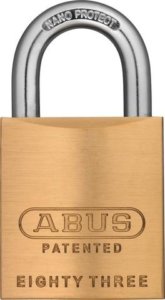
Free-swinging metal gates that latch at the top still have a big flaw: many can be opened from the bottom of the gate, exactly where a small child would be. The least expensive fix is a keyed or combination padlock, because the lock exception frees you from the latch-height restriction. ACME sells ABUS padlocks (on Amazon) that can be keyed to match your house key, and easy-to-use combination padlocks from Master Lock (on Amazon). See how a determined latch can fail in the video below.
Watch: How pool gates can be opened by a child
Self-latching aftermarket latches and gate closers
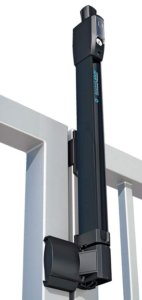
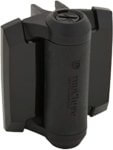
Aftermarket latches mount on many tubular gate styles and either meet the height threshold or provide keyed access. The MagnaLatch (on Amazon) is a favorite because the release sits very high and out of reach, and auto-latching options are easily found under $100. For self-closing, most residential gates use spring hinges; the True Close hinge (on Amazon) lasts and installs easily. Commercial gates use stronger tension-spring kits or a gate closer like the KantSlam (on Amazon) so the gate closes without slamming. Whatever you choose, the gate must self-latch closed on its own to be compliant. We also cover keyless gate locks for community pools.
When perimeter fencing is part of the barrier
When part of the property wall acts as the pool barrier but no part of the home does, the rules match free-standing fencing, with one catch: any other gate along that perimeter wall leading into the pool area must meet the same locking standards. Some cities require taller property fencing too. Chandler requires 6 feet. Always check your city code.
Larger vehicle gates are not exempt and can be hard to make self-latch reliably. Some cities waive the self-close/latch rule if the gate stays padlocked unless in use; others require at least one leaf to self-close against an inactive leaf. A padlock is the cheapest route where allowed, but heavy or poorly built gates may need a gate company, or a locksmith to weld on self-locking latches. See our guide to gate locks for chain link fences.
When part of the home acts as the barrier
This is the most involved case. Beyond the general requirements, every exit from the home and every window that opens to the pool area must be secured and, in some cities, alarmed. House doors to the pool must be self-closing and self-latching; light-use spring hinges handle the self-closing part.
Self-latching deadbolts auto-lock when the door closes, unlike a traditional deadbolt that must be thrown by hand. A common Arizona trick is to put the knob or lever in the original deadbolt hole and move the deadbolt to the lower hole, but the highest locking mechanism must still be at least 54 inches high, so the door may need drilling for a compliant self-latching lock. If code allows, a keyed self-latching double-cylinder deadbolt (gate-latch deadbolts on Amazon) can replace a single-cylinder one in place, since keyed locks remove the height rule. Our door egress and compliance team handles these conversions.
Sliding glass (Arcadia) doors that access the pool must also be self-closing; home kits exist (on Amazon), or a patio-door company can install a closer, since most AZ locksmiths do not. Everything else on the list, gates, swinging doors, latches, and locks, we can take care of. If you are not sure what your gate needs, send us a photo and we will tell you. Many cities also require a loud door alarm on every door to the pool, usually one meeting a specified ANSI standard, so confirm the product is listed as compliant before buying.
Other pool security options
Other situations and fixes exist, including permanent pool covers, above-ground pool rules, and zoning exemptions for some communities. The topic is too broad to cover every case here, so confirm details against your city code below.
Arizona pool code links by city
For Maricopa County references, here are the relevant pool codes for the larger communities:
For further references in the Maricopa County, Arizona region, here are some links to relevant pool codes in the larger communities:
Arizona Revised Statute 36-1681: Pool Enclosures; requirements; exceptions; enforcement
Maricopa County Fence, Wall, and Pool Barrier Requirements (PDF)
Chandler Pool fence requirements: Chandler Arizona Pool Barrier Guidelines (PDF)
Gilbert Pool fence requirements: Town of Gilbert Swimming Pool Code (4.107)
Glendale Pool fence requirements: Glendale Arizona Code of Ordinances Ch32, Swimming Pools
Mesa Pool fence requirements: City of Mesa Swimming Pool Code
Peoria Pool fence requirements: Peoria Swimming Pool and Spa Barrier Code
Phoenix Pool fence requirements: City of Phoenix Pool Code Policy
Scottsdale Pool fence requirements: Scottsdale Arizona Municipal Code Pool Code (Sec 31-68)
Surprise Arizona Residential Swimming Pool Requirements - Uses the 2018 International Residential Code
Tempe Pool fence requirements: City of Tempe Private Outdoor Swimming Pool Barrier Enclosure Requirements